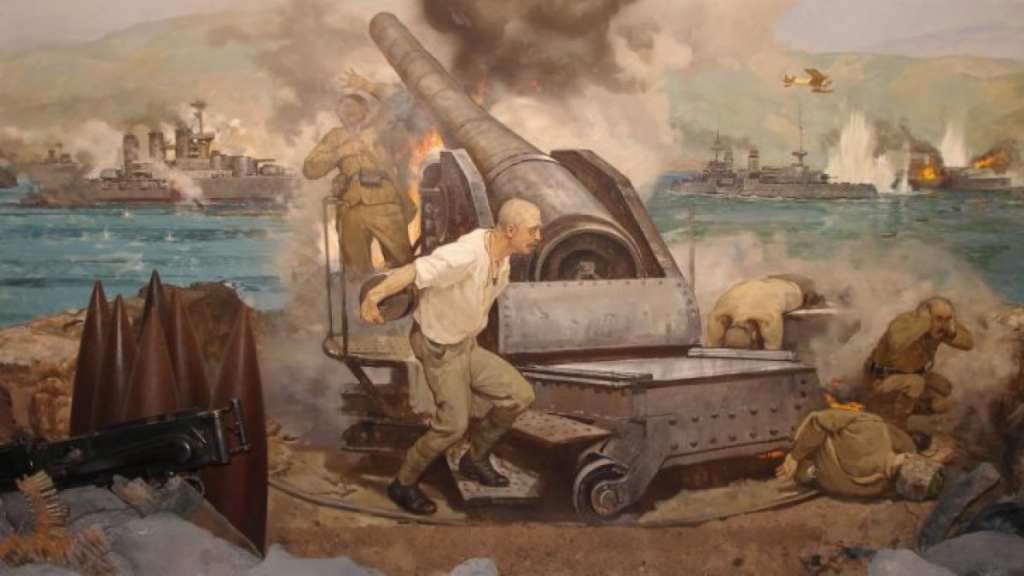
The Gallipoli Campaign, also known as the Çanakkale War, had a profound impact on the artistic expression in Turkey. The war, which took place during World War I, served as a source of inspiration for many artists, poets, and writers, and its impact can be seen in the literature, poetry, visual arts, music, and film of the time.
In literature, the war and the heroism of the soldiers were often reflected in poetry and prose. Many poets and writers wrote about the war and the emotions and feelings of the people at the time. These works not only reflected the heroism of the soldiers but also the suffering of the people and the pain of loss and sacrifice. The war also inspired many writers to create fiction that depicted the events and emotions of the war, and these works have become an important part of Turkey's literary heritage.
In the visual arts, the war had a significant impact as well. Many artists created works that depicted the war and the soldiers' heroism. These works, which include paintings, sculptures, and photographs, not only capture the events of the war but also the emotions and feelings of the people at the time. The war also served as a source of inspiration for many artists to create abstract works that reflected the emotions and feelings of the time, rather than the events of the war itself.
The Gallipoli Campaign also had a significant impact on the music and film industry. Many songs and movies were produced to commemorate the soldiers who fought in the war, and to keep their memory alive. These works often reflected the heroism of the soldiers and the emotions and feelings of the people at the time, and they continue to be popular today.
In conclusion, the Gallipoli Campaign had a profound impact on the artistic expression in Turkey. The war served as a source of inspiration for many artists, poets, and writers, and its impact can be seen in the literature, poetry, visual arts, music, and film of the time. The works produced during and after the war continue to be an important part of Turkey's cultural heritage and continue to be a source of inspiration for future generations.
Behzad Jafari
Museum Researcher